
What to Do in Yerevan: Local Hangouts, Art, and Soviet-Era Stories
7 min read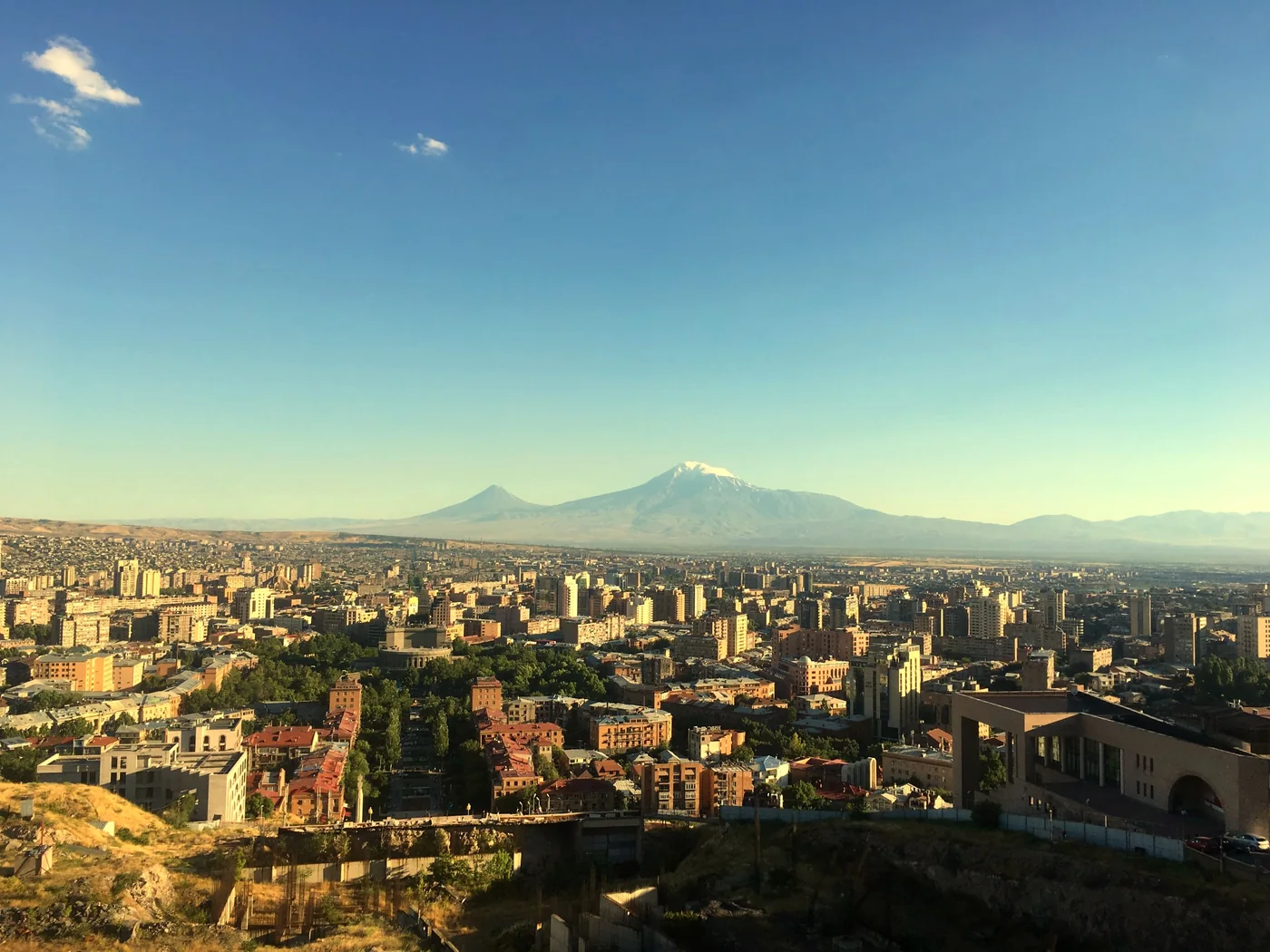
Yerevan’s history lives alongside its everyday routines. Soviet-era architecture frames neighborhood life, metro entrances become sightseeing stops, and museums reveal the creativity that flourished despite censorship.
For travelers seeking local travel experiences, the city rewards curiosity. Beyond its famous landmarks are quieter residential streets, artistic communities, and markets where a conversation can become the highlight of an afternoon.
Explore Cascade and Continue to Victory Park
Cascade and the Cafesjian Center for the Arts are must-see places in Yerevan. The monumental staircase, sculptures, and exhibition spaces bring contemporary art into one of the city’s most recognizable Soviet-era architectural projects. Explore Cascade’s architecture.
Discover Mother Armenia and Soviet-Era Military Displays
Travelers who continue uphill through the surrounding streets toward Victory Park discover a more local atmosphere, with families walking and residents spending time outdoors.
The park’s old-fashioned character forms part of the experience. Mother Armenia overlooks the city beside displays of Soviet-era military equipment, while Victory Park commemorates victory in the Second World War.
The museum inside the monument explores Armenian participation in that war and subsequent military history. Mother Armenia museum information
Maps: Cascade · Victory Park and Mother Armenia
Discover Contemporary Art at HayArt
HayArt Cultural Center connects Yerevan’s architectural past with its contemporary artistic life. Its exhibition spaces have hosted Armenian and international artists working across printmaking, installation, and experimental media. About HayArt
The local account behind this guide associates its revival with the period following Armenia’s 2018 Velvet Revolution, after years of closure or limited activity.
For travelers interested in the city’s creative development, HayArt offers a place to explore how an established cultural space can find new purpose.
Visit the Chess House and University Neighborhood
The Tigran Petrosian Chess House is a striking example of Soviet modernist architecture. Its triangular form, stone façade, and copper chess pieces reflect the importance of chess in Armenian cultural life.
Look Inside the Great Hall
The interior deserves attention, too. Chess-themed mosaics and the arrangement of the playing spaces make the hall interesting even for visitors who have never played a serious game.
As the building serves a working chess school and competition venue, visitors should ask about access before entering. Architectural details
Visitor information: Chess House · Map
Walk Around Yerevan State University
Nearby, the public streets around Yerevan State University introduce a different energy. During term time, Armenia’s youth buzz between classes, cafés, and conversations—perhaps wondering whether they will pass their end-of-semester exams.
A walk through the neighborhood offers a glimpse of student life, with time to pause for coffee along the way.
Get to Know Rambalkoshe’s Artistic Community
Rambalkoshe provides an introduction to Armenia’s contemporary creative community. Its work connects visual art, music, and experimentation, including projects that give historic spaces new cultural meaning.
For visitors curious about the people shaping local culture, exploring Rambalkoshe’s work offers a useful starting point. Its creative network reflects a side of Armenia that extends beyond traditional museum collections. About Rambalkoshe
Discover Hayfilm’s Soviet Cinema Legacy
Hayfilm belongs to the story of Armenian filmmaking during the Soviet period. Its studios were associated with the production of Armenian cinema, making the site interesting to travelers drawn to film history and places beyond the central sightseeing circuit.
The site has also hosted contemporary music gatherings, connecting its filmmaking past with newer creative communities. Those interested in visiting should establish access beforehand, as it is not a conventional walk-in museum.
Map: Hayfilm
Explore Yerevan’s Bar Culture
Some local travel experiences unfold over a drink and an unexpected conversation. Yerevan’s smaller bars offer a chance to discover the city through music, hospitality, and the people sharing the room.
Simona: Cocktails and a Cozy Setting
Simona on Aram Street is a local recommendation for cocktail enthusiasts and music lovers. Its intimate atmosphere suits an evening that begins with a drink and leaves room for conversation. About Simona
Map: Simona Bar
The Beatles Pub: Music Beyond the Name
The Beatles Pub brings together music and cocktail culture. One memorable connection is Edward Margaryan, who has been profiled as both a bartender there and a professional opera singer. His story captures the unexpected overlap between Yerevan’s artistic and everyday lives. Read about the pub’s musical connection.
An espresso martini is the local recommendation for visitors exploring its cocktail offerings.
Map: The Beatles Pub
Explore Soviet-Era Architecture on the Metro
Yerevan’s metro turns a practical journey into an architectural outing. Its Soviet-era stations reveal the attention given to public transport design, with entrances and surrounding spaces worth exploring above ground.
Four Stations Worth a Stop
- Yeritasardakan: Its angled, tube-like entrance is a distinctive example of Armenian modernism.
- Republic Square: A sunken courtyard and sculptural fountain make the approach part of the experience.
- Zoravar Andranik: A useful stop for exploring the surrounding streets and continuing toward the markets.
- Sasuntsi Davit: The nearby railway station and David of Sassoun monument extend the architectural walk.
Yeritasardakan and Republic Square are particular highlights of the city’s modernist architecture.
Discover Ajapnyak’s Parks and Soviet-Era Neighborhoods
Ajapnyak offers a view of Yerevan shaped by science, residential planning, and community life.
Walk Around Tumanyan Park and TUMO
Established during the Soviet period, Tumanyan Park offers walking paths and recreation spaces beside the Hrazdan Gorge.
The nearby TUMO Center for Creative Technologies adds a contemporary educational chapter to the neighborhood through its approach to technology and design learning. About the park and TUMO
Map: Tumanyan Park
Explore the Physicists’ Neighborhood
The residential area associated with the Yerevan Physics Institute reflects the city’s scientific heritage. Around Alikhanyan Brothers Street, quieter public streets introduce a neighborhood connected with researchers and their families.
Visitors can appreciate its atmosphere while remembering that these are residential spaces.
Map: Alikhanyan Brothers Street
Discover the 16th District and the “CCCP” Story
The 16th District offers a more monumental encounter with Soviet-era housing. Its large blocks are associated with the story that their arrangement was intended to spell “CCCP,” the Cyrillic abbreviation for the USSR.
That story appears in the documentary 16 District, 16 Floors, 16 People, which explores residents’ lives within this Soviet legacy. It adds context to a neighborhood walk, even though the supposed lettering is not readily visible from street level. About the documentary
Map: 16th District
Discover Parajanov’s Art Under Soviet Repression
The Sergey Parajanov Museum introduces an extraordinary talent in cinema and visual art whose imagination endured censorship and imprisonment.
Soviet authorities prevented Parajanov from making films for years. His persecution included charges relating to homosexuality, and international artists campaigned for his release. Federico Fellini was among those who signed petitions calling for his freedom. Background on the campaign
Look Closely at the Collages
When filmmaking was denied to him, collages, drawings, dolls, and assembled objects became vital forms of expression. The museum preserves works created during imprisonment alongside pieces from other periods.
Ordinary materials become intricate visual stories. Understanding the restrictions under which some were made gives their inventiveness even greater force.
Visitor information: Parajanov Museum · Map
Browse the Gold Market on Khorenatsi Street
The gold market brings together eye-catching displays of rings, bracelets, necklaces, and earrings, including work by Armenian jewelers.
Some designs resemble international jewelry styles; others offer a local twist. The appeal lies in examining the details and speaking with sellers about the people who make the pieces.
Buyers can compare gold purity, weight, and workmanship rather than assume that a familiar design indicates a particular brand. For those simply browsing, the shining displays offer plenty to enjoy.
Map: Gold Market on Khorenatsi Street
Experience GUM Market Through Smell, Color, and Taste
GUM Market brings the senses together. Seasonal fruit and vegetables fill the stalls alongside dried fruit, nuts, herbs, and Armenian pantry favorites.
Travelers can ask what is ripe, taste when invited, and pick up something delicious for later. Conversations with sellers make the market as memorable as its colors and aromas. GUM Market visitor information
After exploring Soviet-era architecture and the city’s creative spaces, the market offers time with everyday Yerevan—and the people who give it life.
Map: GUM Market