Visiting an Armenian Home: Meals and What to Expect
By LikeLocal4 min readIn Armenia, welcoming guests is a pleasure, and sharing a meal is one of the warmest ways to get to know each other. A generously laid table, homemade dishes, and an invitation to stay a little longer can turn a visit into a memory you carry home. Come with an appetite for good food, conversation, and a glimpse of family life.Read more +Show less −
A warm welcome and a generous table
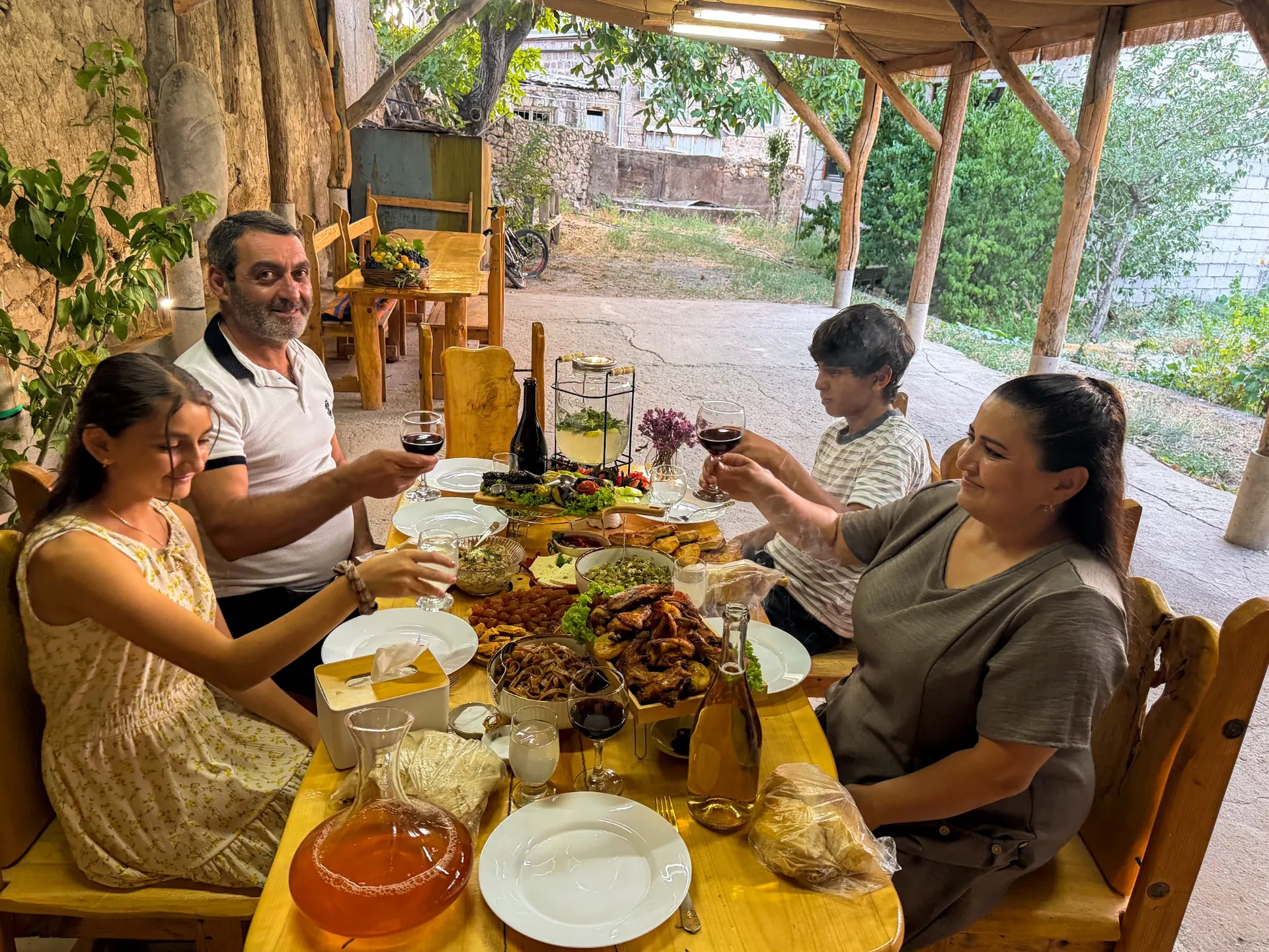
For many Armenian families, receiving guests is a happy occasion. Hosts take pride in making people feel comfortable, bringing out favorite dishes and making room around the table. You may be encouraged to try a little of everything, offered another helping, or invited to linger over coffee as the conversation continues.
The table is often generous and full of variety: fresh herbs and vegetables, bread, cheeses, seasonal flavors, and homemade dishes prepared with care. Every family has its own recipes and way of welcoming people, so the menu will depend on your host and the season. That personal touch is part of the pleasure of visiting a home.
There is more to share than food. Ask about a family recipe, tell a story from your own travels, or simply enjoy the conversation as dishes are passed around. You do not need to know every custom to feel welcome. A little curiosity and a warm smile are a lovely place to start.
What happens at a family meal?
Every household offers something different. Some visits center on a homemade dinner; others include breakfast, time in a garden, or a look at a host’s creative work. Read the individual profile to understand the experience before booking.
“We’d love to have you over and make you feel at home.”
Zhanna Babayan, from her LikeLocal host profile
Choose a visit that fits your interests
If food and art appeal to you, Artak’s meals in Yerevan take place in a home filled with paintings and travel keepsakes. Karine’s studio visit focuses on paintings, their stories, and conversation over wine or coffee.
A little planning gives your hosts time to prepare a warm welcome. Profiles list a contribution per person and suggested visit times, and many hosts ask for two or three days’ notice. Share any allergies or food preferences when booking so the family can confirm what they can prepare for you.
Payments are currently made in cash directly to host families, as explained in the LikeLocal booking FAQ. Check the profile’s current contribution and confirm the details when booking.
Language, photos, and conversation
Check the languages on the host’s profile. Some families speak English; others use help from family members or Google Translate. A little patience and curiosity leave room for everyone to join the conversation.
Ask before photographing or sharing private family moments. Let your host guide you through the household’s routines, and discuss your arrival time if your plans change.
What about an Armenian wedding?
A wedding is a different experience from a regular meal at home. Armenian weddings and family celebrations are available upon request. The LikeLocal team connects guests with a local contact and provides event details. Transport is not included in the contribution, and a wedding may involve several locations.
Read what to expect at your first Armenian wedding for an introduction to the traditions. Confirm availability, dress code, and arrangements before making travel plans around an event.
Find your host
Browse the LikeLocal host profiles, then send your preferred dates, group size, and food requirements using the booking button. The team will help you check availability and arrange the visit.
Christianity in Armenia: Churches, Holidays, and Everyday Life
By LikeLocal5 min readOn the evening of January 5, families leave Armenian churches carrying candles lit from a shared flame. Months later, on a summer Sunday, neighbors take to the streets with buckets of water, ready to soak anyone who passes. Both scenes belong to Armenia’s religious calendar: one is Christmas Eve, the other is Vardavar.Read more +Show less −
Armenia was the first state to adopt Christianity as its official religion. For visitors, some of the most memorable local travel experiences come from seeing what that history means to people today: a baptism in a village church, a holiday meal, or a water fight that draws an entire neighborhood outside.
How Armenia Became the First Christian State
Armenian tradition dates the kingdom’s adoption of Christianity to AD 301, when Saint Gregory the Illuminator converted King Tiridates III. The story leads to Khor Virap, a monastery near Mount Ararat. According to tradition, the king held Gregory prisoner there for years before accepting the faith Gregory preached.
The 1,700th Anniversary and Two Papal Visits
In 2001, Armenia celebrated 1,700 years since the adoption of Christianity. Yerevan’s Saint Gregory the Illuminator Cathedral was consecrated to mark the anniversary. Pope John Paul II visited that September and prayed at the new cathedral. Pope Francis visited Armenia in 2016, joining Catholicos Karekin II at Holy Etchmiadzin. The visits brought together two distinct churches: the Roman Catholic Church and the Armenian Apostolic Church.
How the Church Helped Preserve Armenian Identity
One of the Church’s most lasting contributions was giving generations of Armenians the means to read and write in their own language. In the early fifth century, the monk Mesrop Mashtots created the Armenian alphabet with the support of the king and the Catholicos. Translators used it for the Bible; scholars and scribes used it for poetry, histories, and manuscripts that survive today.
That work mattered during long periods without an independent Armenian state. More than five centuries separated the fall of the Armenian Kingdom of Cilicia in 1375 from the founding of the First Republic in 1918. In Armenia and across the diaspora, parishes and schools gave families places to teach their children Armenian, worship together, and preserve customs far from their ancestral homes.
Which Armenian Churches Should Travelers Visit?
In many Armenian villages and city neighborhoods, the parish church is where families gather for baptisms, weddings, and funerals. Three UNESCO World Heritage sites show how Armenian churches also served as centers of learning and craftsmanship.
Etchmiadzin, in Vagharshapat: Sometimes called “Armenia’s Vatican,” Etchmiadzin Cathedral is the spiritual center of the Armenian Apostolic Church and the seat of the Catholicos of All Armenians. The comparison is about its religious role, not its political status. The UNESCO site also includes the churches of Saint Hripsime and Saint Gayane and the ruins of Zvartnots Cathedral.
Geghard and the Upper Azat Valley: At Geghard Monastery, visitors can walk from a stone-built church into chambers carved directly into the cliff. Inside, it can be difficult to tell where the mountain ends and the church begins.
Haghpat and Sanahin, in Lori: These two monasteries share a UNESCO listing. Sanahin’s academy and scriptorium make the Church’s role in preserving Armenian learning tangible: the complex held space for studying and copying manuscripts as well as for prayer.
Armenian Holidays: Christmas, Easter, and Vardavar
Many of Armenia’s best-loved holidays have religious roots. Families observe them in different ways, but their customs often extend beyond a church service and into homes, courtyards, and streets.
Armenian Christmas Begins on January 5 in the Evening
One distinctive feature of Armenian Christmas is that the Armenian Apostolic Church celebrates Christ’s birth and baptism together on January 6. Celebrations begin on Christmas Eve, the evening of January 5. At the candlelit service, worshippers pass a flame from person to person. Many carry their candle home to light the family Christmas table.
Easter, too, brings church and home together. After the service, families may gather for a meal and tap red-dyed eggs against one another to see whose shell stays whole.
Vardavar: A Feast Celebrated with Water
Vardavar brings together an older Armenian water tradition and the Christian Feast of the Transfiguration. Its date changes each year, but its most recognizable custom is the same: people of all ages splash one another with water.
Children carry water guns, neighbors fill buckets, and a visitor crossing a square may get as wet as someone who grew up on the street. A change of clothes is useful; a dry place for a phone is even better.
Faith and Festivity at the Armenian Table
The church calendar can shape what families eat. Some Armenians observing Great Lent set meat aside. At weddings and other celebrations, pork khorovats—barbecue cooked on skewers over hot coals—is a favorite centerpiece. Pork is common in Armenian cooking, and serving it at a celebration is a culinary custom rather than a religious requirement. The town of Akhtala in Lori has even hosted an annual barbecue festival devoted to khorovats.
For travelers visiting Haghpat or Sanahin, a home-cooked lunch or dinner with a LikeLocal host offers another way to get to know Lori. A host might remember who tended the coals at family weddings, who carried the Christmas candle home, or which neighbor was impossible to avoid on Vardavar. Those are the details that make a holiday feel like part of someone’s life.
Hiking in Armenia: Mountain Trails and Local Travel Experiences
By LikeLocal8 min readA forest path leading to a medieval monastery. A volcanic crater holding a mountain lake. A village where a long walk ends with a home-cooked meal and conversation.Read more +Show less −
Hiking in Armenia brings landscapes and people together. For travelers seeking local travel experiences, its trails offer a way to discover both the mountains and the communities living among them.
That combination has earned international recognition. National Geographic included the Transcaucasian Trail in Armenia in its Best of the World 2027 selection of 25 destinations, highlighting the country’s mountainous landscapes, historic paths, and rural communities.
Plan a Hike with the Transcaucasian Trail and HIKEArmenia
Armenia offers everything from woodland day walks to demanding mountain crossings. Two initiatives have helped make these landscapes more accessible to hikers.
The Transcaucasian Trail: Discover Armenia on Foot
The Transcaucasian Trail, or TCT, is a developing long-distance trail network across the Caucasus. Its Armenian route extends for more than 800 kilometers, connecting forests, volcanic highlands, canyons, and villages.
Travelers do not need to complete the entire route. A shorter section can introduce a single region, leaving time for monasteries, village stops, and conversations along the way.
Some stretches require independent navigation and self-sufficiency. Updated route information matters, as trail alignments and conditions can change.
HIKEArmenia: Choose a Route That Fits
HIKEArmenia helps travelers compare trails by distance and difficulty, explore route descriptions, and find local hiking expertise.
It is particularly useful for planning several day hikes rather than one long expedition. A trip might combine a fortress walk in Vayots Dzor, a forest trail in Dilijan, and a mountain ascent later in the week.
Vayots Dzor: Rocky Mountains, Fortresses, and Wine Country
Vayots Dzor offers exposed ridges, deep valleys, and mountains colored in earthy reds and browns. Its trails connect dramatic scenery with medieval monuments and villages shaped by Armenia’s winemaking traditions.
Hike to Smbataberd and Tsaghats Kar
The villages of Artabuynq and Yeghegis provide access to Smbataberd Fortress. Its walls occupy a commanding position above the valleys, making the approach as memorable as the destination.
A longer outing can include Tsaghats Kar Monastery. Together, the sites create a walk through a landscape shaped by defense, faith, and village life.
The distance and climbing depend on the starting point and whether both monuments are included. Travelers should choose a specific mapped route before setting out.
Spring brings greener slopes and wildflowers, while autumn offers cooler walking conditions and harvest-season atmosphere.
Summer can be hot on exposed paths, so early starts and sufficient water are important. Higher routes retain snow longer than the valleys. Those planning a longer TCT journey should check the latest route alignment rather than rely on older regional maps.
Lori: Forested Gorges and Village Life
Lori reveals a greener side of Armenia. Forests cover the slopes, villages sit above deep gorges, and paths connect medieval ruins with communities where everyday life continues around them.
Explore the Dsegh Loop
Dsegh, the birthplace of poet Hovhannes Tumanyan, makes a rewarding base for walking. The village’s literary heritage adds another dimension to its surrounding forests and valleys.
The Dsegh Loop is approximately 8.7 kilometers, with an estimated walking time of four hours. The route passes through woodland and a river valley, with sights including the ruins of Bardzrakash St. Gregory Monastery and carved cross-stones.
The return climb deserves some energy in reserve. Wet ground or thick vegetation can make the walk slower than its distance suggests.
Late spring brings lush greenery, while autumn adds color to the wooded slopes. Summer offers shaded walking, although gorge routes can still feel warm and humid.
Lori is also a natural place to combine hiking with hospitality. LikeLocal features hosts in the Lori region who welcome travelers into their homes, making it possible to arrange lunch or dinner around a day outdoors.
The host’s location, meal time, and transport should be coordinated with the hike. Around the table, travelers can hear about village life, share their own stories, and discover the region through its food.
Dilijan’s appeal lies in its woodland landscapes. Trails move between shaded forest, open clearings, and villages where monastery domes appear above the trees.
It is a rewarding choice for travelers who enjoy combining nature with cultural stops.
Walk Between Parz Lake and Goshavank
The route between Parz Lake and Goshavank Monastery is approximately 7.2 kilometers one way. It connects a lakeside setting with forest paths, open sections, and the village of Gosh.
Because this is a point-to-point walk, hikers should arrange onward transport or allow enough time and energy for the return journey.
Longer routes also connect Dilijan town with the surrounding lakes and villages, creating options for a full day outdoors.
Late spring brings fresh leaves and green meadows. Summer provides woodland shade, while autumn transforms the forest into gold and copper.
Rain can make the trails muddy, and fallen leaves may conceal uneven ground. Winter offers a quieter landscape, but snow and ice require different equipment and preparation.
Azhdahak: A Volcanic Summit with a Crater Lake
Mount Azhdahak rises to approximately 3,597 meters in the Gegham Mountains. Its volcanic slopes and summit crater lake create a striking contrast with northern Armenia’s forests.
The wider range also contains prehistoric petroglyphs and dragon stones, connecting the mountain landscape with ancient human activity.
Choose a Summit Hike or a Longer Trek
An Azhdahak outing can take different forms. A day trip may combine a four-wheel-drive approach with a summit hike, while longer journeys involve camping and exploring more of the volcanic highlands.
Walking distance depends heavily on where the vehicle journey ends. Travelers should confirm the starting point, elevation gain, and return arrangements before choosing a route.
July and August are the core hiking months, with September sometimes suitable depending on conditions. Snow can linger into early summer, and the high terrain becomes wintry much sooner than Armenia’s lower valleys.
Aragats: Four Summits and a High-Mountain Challenge
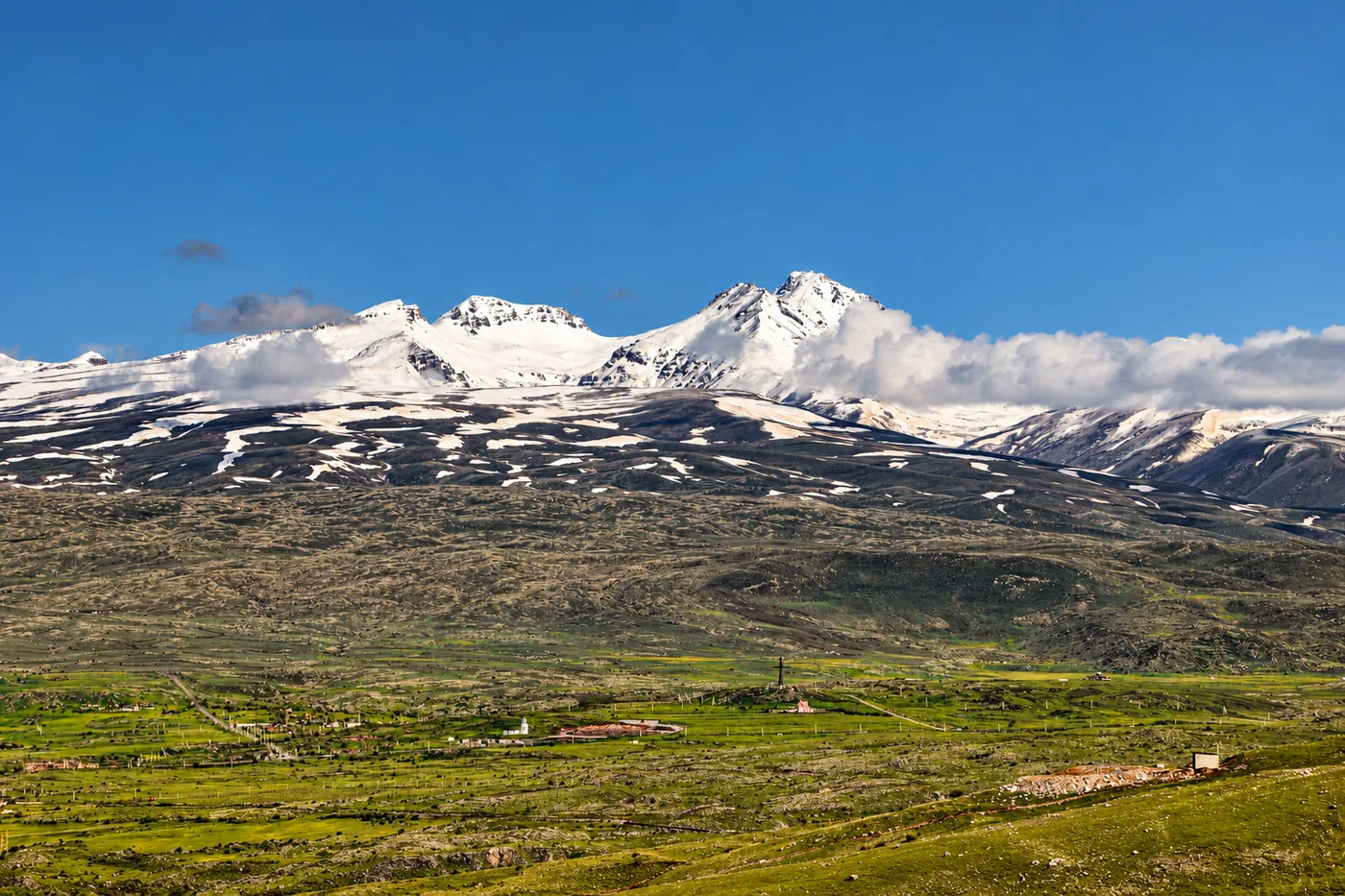
Aragats is Armenia’s highest mountain, with four summits surrounding a vast volcanic crater. Its northern summit reaches approximately 4,090 meters, while the southern summit offers a more accessible—but still demanding—mountain hike.
Start from Lake Kari for the Southern Summit
A common approach begins at Lake Kari, around 3,200 meters above sea level. From there, hikers climb toward the southern summit, approximately 3,890 meters high.
A typical return route is around 10 kilometers, although the precise distance varies. Rocky ground, altitude, and exposure make this a substantial outing even for travelers comfortable with lower-elevation walks.
The northern summit is a separate, more demanding objective and should not be treated as an easy addition to the day.
July through September generally offers the most practical hiking window. Earlier visits can encounter significant snow, while later autumn brings shorter days, colder conditions, and renewed snowfall.
Road access to Lake Kari also depends on conditions. Travelers should confirm access and mountain weather rather than judge the day by temperatures in Yerevan.
Choose the Right Season for Each Landscape
Armenia does not have one hiking season that suits every region equally.
Location
General planning window
What makes the season distinctive
Vayots Dzor’s lower and middle slopes
Spring and autumn
Green spring hills, harvest atmosphere, and cooler walking conditions
Lori
Late spring to autumn
Lush woodland, shaded sections, and autumn colors
Dilijan
Late spring to autumn
Forest walks, fresh spring growth, and colorful autumn foliage
Azhdahak
Mainly July–August; September if conditions permit
A short season for exploring high volcanic terrain
Aragats summit hikes
Generally July–September
Alpine landscapes, with snow and weather affecting access
These are planning windows rather than guarantees. Elevation, recent weather, and the chosen route all matter.
Prepare for the Actual Trail
Destination pages help identify places, but they do not replace a hiking map. Travelers should download their chosen route, check recent conditions, and arrange return transport before setting out.
Suitable footwear, layers, water, food, and offline navigation are important. High-altitude routes require particular care, and unfamiliar mountain terrain is a good reason to seek experienced local guidance.
Make Room for the People Along the Trail
A hike reveals Armenia’s landscapes. Time with local people adds another perspective: how the seasons shape daily life, what grows nearby, and which dishes arrive on the family table.
In Lori, travelers can pair their walking plans with a lunch or dinner arranged through LikeLocal. For other regions, they can ask the team about suitable host options before adding a meal to the itinerary.
These local travel experiences give a hiking trip room for more than distance and summits: a warm welcome, good food, and stories shared after a day outdoors.
What to Do in Yerevan: Local Hangouts, Art, and Soviet-Era Stories
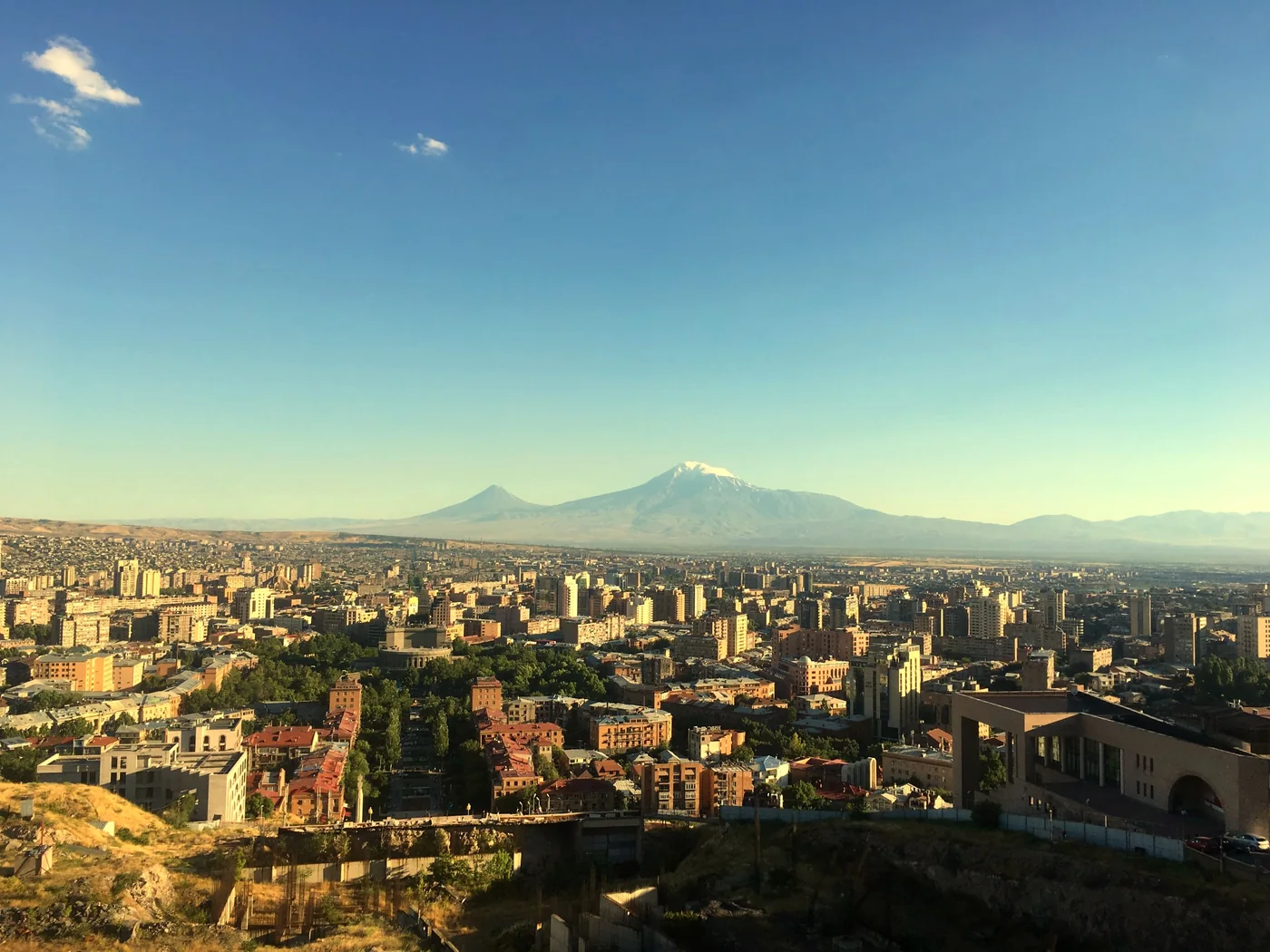
By LikeLocal7 min readYerevan’s history lives alongside its everyday routines. Soviet-era architecture frames neighborhood life, metro entrances become sightseeing stops, and museums reveal the creativity that flourished despite censorship.Read more +Show less −
For travelers seeking local travel experiences, the city rewards curiosity. Beyond its famous landmarks are quieter residential streets, artistic communities, and markets where a conversation can become the highlight of an afternoon.
Explore Cascade and Continue to Victory Park
Cascade and the Cafesjian Center for the Arts are must-see places in Yerevan. The monumental staircase, sculptures, and exhibition spaces bring contemporary art into one of the city’s most recognizable Soviet-era architectural projects. Explore Cascade’s architecture.
Discover Mother Armenia and Soviet-Era Military Displays
Travelers who continue uphill through the surrounding streets toward Victory Park discover a more local atmosphere, with families walking and residents spending time outdoors.
The park’s old-fashioned character forms part of the experience. Mother Armenia overlooks the city beside displays of Soviet-era military equipment, while Victory Park commemorates victory in the Second World War.
The museum inside the monument explores Armenian participation in that war and subsequent military history. Mother Armenia museum information
HayArt Cultural Center connects Yerevan’s architectural past with its contemporary artistic life. Its exhibition spaces have hosted Armenian and international artists working across printmaking, installation, and experimental media. About HayArt
The local account behind this guide associates its revival with the period following Armenia’s 2018 Velvet Revolution, after years of closure or limited activity.
For travelers interested in the city’s creative development, HayArt offers a place to explore how an established cultural space can find new purpose.
The Tigran Petrosian Chess House is a striking example of Soviet modernist architecture. Its triangular form, stone façade, and copper chess pieces reflect the importance of chess in Armenian cultural life.
Look Inside the Great Hall
The interior deserves attention, too. Chess-themed mosaics and the arrangement of the playing spaces make the hall interesting even for visitors who have never played a serious game.
As the building serves a working chess school and competition venue, visitors should ask about access before entering. Architectural details
Nearby, the public streets around Yerevan State University introduce a different energy. During term time, Armenia’s youth buzz between classes, cafés, and conversations—perhaps wondering whether they will pass their end-of-semester exams.
A walk through the neighborhood offers a glimpse of student life, with time to pause for coffee along the way.
Rambalkoshe provides an introduction to Armenia’s contemporary creative community. Its work connects visual art, music, and experimentation, including projects that give historic spaces new cultural meaning.
For visitors curious about the people shaping local culture, exploring Rambalkoshe’s work offers a useful starting point. Its creative network reflects a side of Armenia that extends beyond traditional museum collections. About Rambalkoshe
Discover Hayfilm’s Soviet Cinema Legacy
Hayfilm belongs to the story of Armenian filmmaking during the Soviet period. Its studios were associated with the production of Armenian cinema, making the site interesting to travelers drawn to film history and places beyond the central sightseeing circuit.
The site has also hosted contemporary music gatherings, connecting its filmmaking past with newer creative communities. Those interested in visiting should establish access beforehand, as it is not a conventional walk-in museum.
Some local travel experiences unfold over a drink and an unexpected conversation. Yerevan’s smaller bars offer a chance to discover the city through music, hospitality, and the people sharing the room.
Simona: Cocktails and a Cozy Setting
Simona on Aram Street is a local recommendation for cocktail enthusiasts and music lovers. Its intimate atmosphere suits an evening that begins with a drink and leaves room for conversation. About Simona
The Beatles Pub brings together music and cocktail culture. One memorable connection is Edward Margaryan, who has been profiled as both a bartender there and a professional opera singer. His story captures the unexpected overlap between Yerevan’s artistic and everyday lives. Read about the pub’s musical connection.
An espresso martini is the local recommendation for visitors exploring its cocktail offerings.
Yerevan’s metro turns a practical journey into an architectural outing. Its Soviet-era stations reveal the attention given to public transport design, with entrances and surrounding spaces worth exploring above ground.
Four Stations Worth a Stop
Yeritasardakan: Its angled, tube-like entrance is a distinctive example of Armenian modernism.
Republic Square: A sunken courtyard and sculptural fountain make the approach part of the experience.
Zoravar Andranik: A useful stop for exploring the surrounding streets and continuing toward the markets.
Sasuntsi Davit: The nearby railway station and David of Sassoun monument extend the architectural walk.
Yeritasardakan and Republic Square are particular highlights of the city’s modernist architecture.
Discover Ajapnyak’s Parks and Soviet-Era Neighborhoods
Ajapnyak offers a view of Yerevan shaped by science, residential planning, and community life.
Walk Around Tumanyan Park and TUMO
Established during the Soviet period, Tumanyan Park offers walking paths and recreation spaces beside the Hrazdan Gorge.
The nearby TUMO Center for Creative Technologies adds a contemporary educational chapter to the neighborhood through its approach to technology and design learning. About the park and TUMO
The residential area associated with the Yerevan Physics Institute reflects the city’s scientific heritage. Around Alikhanyan Brothers Street, quieter public streets introduce a neighborhood connected with researchers and their families.
Visitors can appreciate its atmosphere while remembering that these are residential spaces.
The 16th District offers a more monumental encounter with Soviet-era housing. Its large blocks are associated with the story that their arrangement was intended to spell “CCCP,” the Cyrillic abbreviation for the USSR.
That story appears in the documentary 16 District, 16 Floors, 16 People, which explores residents’ lives within this Soviet legacy. It adds context to a neighborhood walk, even though the supposed lettering is not readily visible from street level. About the documentary
The Sergey Parajanov Museum introduces an extraordinary talent in cinema and visual art whose imagination endured censorship and imprisonment.
Soviet authorities prevented Parajanov from making films for years. His persecution included charges relating to homosexuality, and international artists campaigned for his release. Federico Fellini was among those who signed petitions calling for his freedom. Background on the campaign
Look Closely at the Collages
When filmmaking was denied to him, collages, drawings, dolls, and assembled objects became vital forms of expression. The museum preserves works created during imprisonment alongside pieces from other periods.
Ordinary materials become intricate visual stories. Understanding the restrictions under which some were made gives their inventiveness even greater force.
The gold market brings together eye-catching displays of rings, bracelets, necklaces, and earrings, including work by Armenian jewelers.
Some designs resemble international jewelry styles; others offer a local twist. The appeal lies in examining the details and speaking with sellers about the people who make the pieces.
Buyers can compare gold purity, weight, and workmanship rather than assume that a familiar design indicates a particular brand. For those simply browsing, the shining displays offer plenty to enjoy.
Experience GUM Market Through Smell, Color, and Taste
GUM Market brings the senses together. Seasonal fruit and vegetables fill the stalls alongside dried fruit, nuts, herbs, and Armenian pantry favorites.
Travelers can ask what is ripe, taste when invited, and pick up something delicious for later. Conversations with sellers make the market as memorable as its colors and aromas. GUM Market visitor information
After exploring Soviet-era architecture and the city’s creative spaces, the market offers time with everyday Yerevan—and the people who give it life.
By LikeLocal4 min readWhen summer’s heat fades and winter has yet to arrive, Armenia welcomes a season full of color and flavor. For travelers looking for days that are neither too hot nor too cold, early autumn is a beautiful time to visit. There’s still plenty of green, nature feels alive, and the harvest brings fresh temptations to every table.Read more +Show less −
From golden evenings in Yerevan to home-cooked dinners with welcoming hosts, here are the local travel experiences to make time for in Armenia this autumn.
Visit Yerevan During the Golden Hours
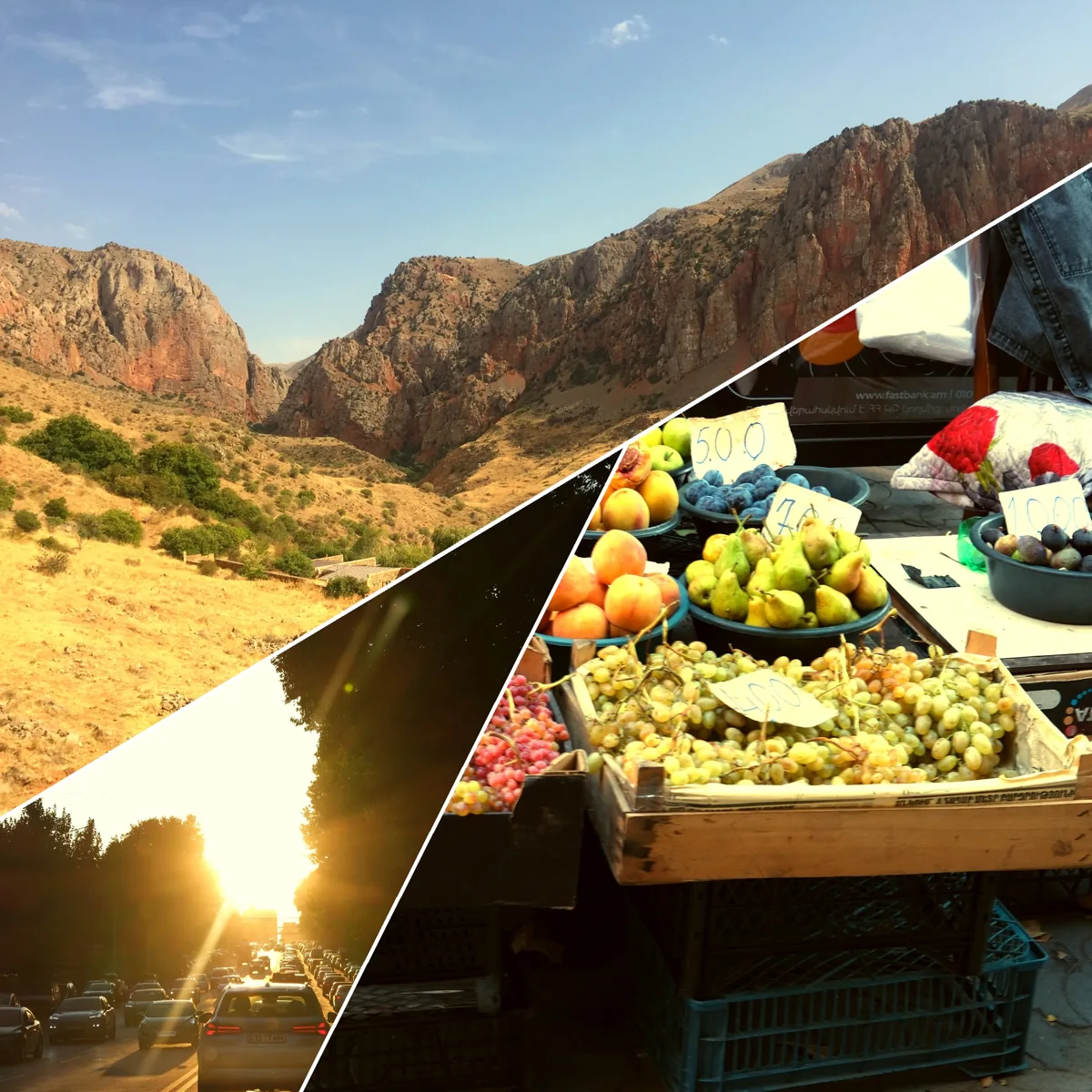
Explore Yerevan when the sunlight falls like honey, covering everything with sweetness. In that warm evening glow, every breath can feel like a sip of love.
People walk through the streets, sip their coffees and wines in open-air cafés, and linger over conversations. Follow their lead: slow down and enjoy the city without rushing to the next stop.
Take a Seat at an Open-Air Café
Choose a terrace, order a favorite drink, and watch everyday life unfold. Leave time for a walk afterward, when the last golden light gives way to the city’s evening energy.
Explore the Rocky, Colorful Mountains of Vayots Dzor
Visit the Vayots Dzor region for hikes through rocky, colorful mountains and views that can take your breath away.
Choose a trail that suits your fitness and the weather. Pack layers, bring water, and allow enough time to enjoy the landscape along the way.
Join the Areni Wine Festival
Every autumn, Areni village welcomes a big celebration of Armenian wine. The annual festival brings together winemakers, residents, and travelers for tastings and festivities.
Check the Areni Wine Festival dates before planning your visit. Take the opportunity to meet producers and hear about the craft behind each glass.
Discover the Autumn Palette of Dilijan
Visit Dilijan as its forested mountains begin to turn gold, copper, and red. Nature composes a unique palette every year, transforming familiar paths into something new.
Early in the season, green still fills much of the landscape. Later, autumn colors spread across the slopes, though their timing depends on the weather.
Slow Down on a Forest Walk
Leave room for a gentle walk, fresh mountain air, and a warm meal afterward. Dilijan rewards travelers who take their time and notice the details: a bright leaf, shifting sunlight, or the quiet between footsteps.
Taste Armenia’s Delicious Fruits and Fresh Vegetables
Let the markets tempt your appetite. Across late summer and autumn, plums, watermelons, peaches, pears, apples, figs, and pomegranates bring color and sweetness to the stalls.
They won’t all be at their best at the same time, so ask what’s fresh and ripe during your visit.
Follow the Flavors of the Season
Pick up fruit for the road and enjoy the fresh vegetables and herbs that fill local markets and tables. Their colors and aromas are enough to tease the appetite before lunch even begins.
Food is an easy way to start a conversation, too. Ask a vendor or host how they like to serve a favorite ingredient.
Check Out Music Festivals and Conferences
Explore Armenia’s calendar of music festivals, business events, and technology conferences. During busy periods, the choice can feel head-spinning.
Depending on the event, musicians, founders, and leaders in their fields come together to share their wisdom, ideas, and craft with the public.
Browse the current events calendar before traveling, and check individual programs for dates, tickets, and speakers.
Visit Locals for a Delicious Home-Cooked Dinner
Of course, leave time to visit locals for a delicious home-cooked dinner. Some of the most memorable local travel experiences begin with a welcome at the door and a place at the table.
Share your travel experiences, ask about everyday life, and let the conversation unfold. If everyone is interested, dive into history or geopolitical conversations with curiosity and respect for different perspectives.
Share a Meal and Make a Friend
Through LikeLocal, travelers can connect with hosts who welcome them into family meals and gatherings.
Come ready to taste, listen, and share. Over good food and an unhurried conversation, there’s a chance to get to know one another—and perhaps become friends.
By LikeLocal3 min readYour first Armenian wedding might start with music at a family home and end with you dancing alongside people you met that morning. In between? Heartfelt toasts, generous plates of food, and plenty of reasons to stay for one more song.Read more +Show less −
Today, Armenian wedding traditions blend family customs with the couple’s personal style. Every celebration is different, but here’s what you might experience—and how to feel comfortable joining in.
Before the wedding
For some families, celebrations begin with khosk arnel, a meeting traditionally held at the bride’s family home.
Historically, the groom’s family formally asked for the bride’s hand in marriage. Today, couples may keep the custom as a way to introduce their families and receive their blessing.
The engagement may be a small gathering at home or a bigger restaurant celebration. An engagement ring is usually part of the occasion, and the groom’s family may bring gifts.
The wedding might follow within months or much later. There’s no fixed timeline.
The wedding morning
The bride and groom may start the day at their respective family homes, surrounded by relatives and friends.
The kavor, often translated as the wedding godfather or sponsor, plays an important role in supporting the couple and taking part in key rituals.
Meanwhile, the bride gets ready with her family and friends. Flowers, photographs, and a table prepared for the groom’s arrival set the scene.
Many couples choose a white wedding dress and a suit or tuxedo, combining contemporary styling with longstanding customs.
Music, gifts, and playful traditions
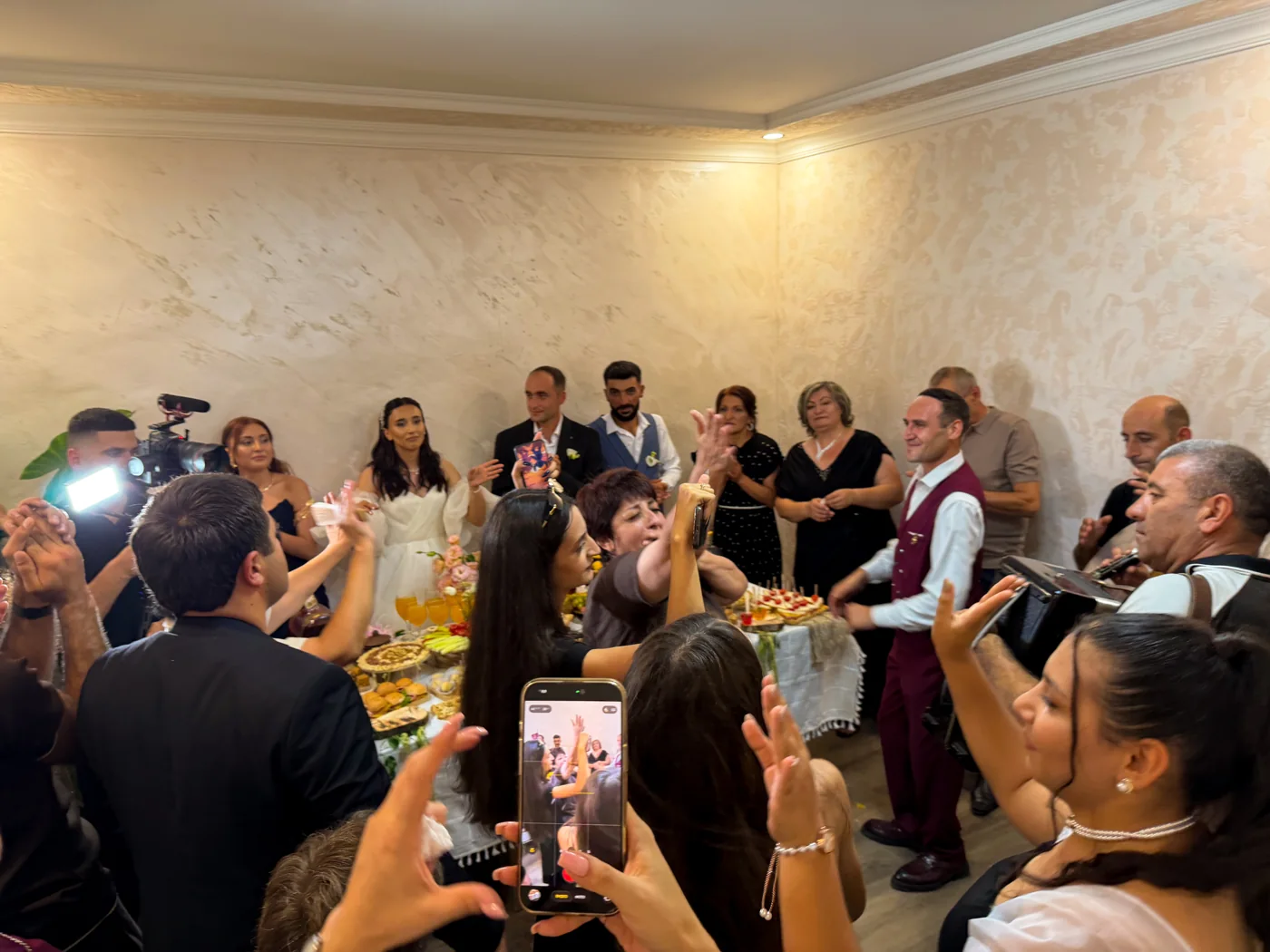
The groom may arrive with relatives, friends, and musicians, with dancing beginning before anyone gets through the door.
His family may carry decorated trays or baskets, sometimes called sini, filled with sweets, gifts, and items for the bride. Expect lively greetings and congratulations all around.
In some families, someone hides one of the bride’s shoes. Getting it back involves playful negotiation and a symbolic payment from the groom’s side. Money may also be placed inside a shoe as a wish for prosperity.
Before the bride puts on her veil, the wedding godmother or another woman close to the family may circle it around her head three times.
Curious about a ritual? Ask someone nearby. Customs and their meanings can differ between families.
A relative—often the bride’s brother—may playfully block the doorway before the couple leaves.
The kavor negotiates a symbolic payment so the wedding party can continue. Some versions involve a ceremonial knife or sword, though many families adapt or skip this tradition.
The church ceremony
For couples having an Armenian Apostolic church wedding, the ceremony is a central part of the day.
The priest leads prayers and blessings, including the crowning of the bride and groom. The crowns symbolize glory, honor, and sacrifice within married life. Read about the ceremony’s symbolism.
As a guest, follow the wedding party’s lead and any guidance about taking photographs. Afterward, there’s usually time for congratulations before the celebrations continue.
Welcoming the newlyweds
Some families welcome the newlyweds with honey for a sweet life together. Lavash, Armenia’s traditional flatbread, may also feature in the ritual.
The couple may then break plates for good luck. These customs can take place at a family home or the reception venue, depending on the celebration. Explore these Armenian wedding customs.
Food, music, and dancing
Food is a big part of an Armenian wedding, with generous tables and plenty of opportunities to talk and meet people.
Some receptions bring together hundreds of guests; others are more intimate. Either way, pace yourself—there’s a whole evening ahead.
Traditional music often shares the playlist with contemporary favorites. The bride may perform a solo Armenian dance, and the couple may share a first dance.
You don’t need to know the steps to join in. Watch the people around you, follow along, and enjoy it. Comfortable shoes are a good idea.
Sweet endings and wedding favors
Some couples include cake cutting and a bouquet toss alongside Armenian customs.
Guests may also receive a tarosik, a small wedding favor associated with passing on wishes for a future marriage, particularly to unmarried guests. It’s a little keepsake wishing for more happy celebrations ahead.
Tips for wedding guests
Check the dress code. Ask what suits the venue and church ceremony.
Wear comfortable shoes. You may spend plenty of time dancing.
Ask about gifts. Your host can explain what’s appropriate.
Confirm the invitation details. A reception invitation may not include the morning gatherings.
Ask before posting photos. Especially during private family moments.
Join at your own pace. Drinking and dancing are always your choice.
Customs vary between regions, communities, and generations. Stay curious, follow your hosts’ lead, and enjoy getting to know the people around you.
Experience Armenian hospitality
A wedding offers a personal introduction to Armenian culture: relatives catching up, friends making toasts, and generations sharing a dance floor.
LikeLocal connects travelers with local people through family meals, gatherings, and celebrations.
Curious about joining an Armenian wedding? Explore LikeLocal and ask about opportunities during your visit. Every invitation starts with a host choosing to welcome you into their celebration.
Bring your curiosity—and leave room for a late night.

 Planning your visit